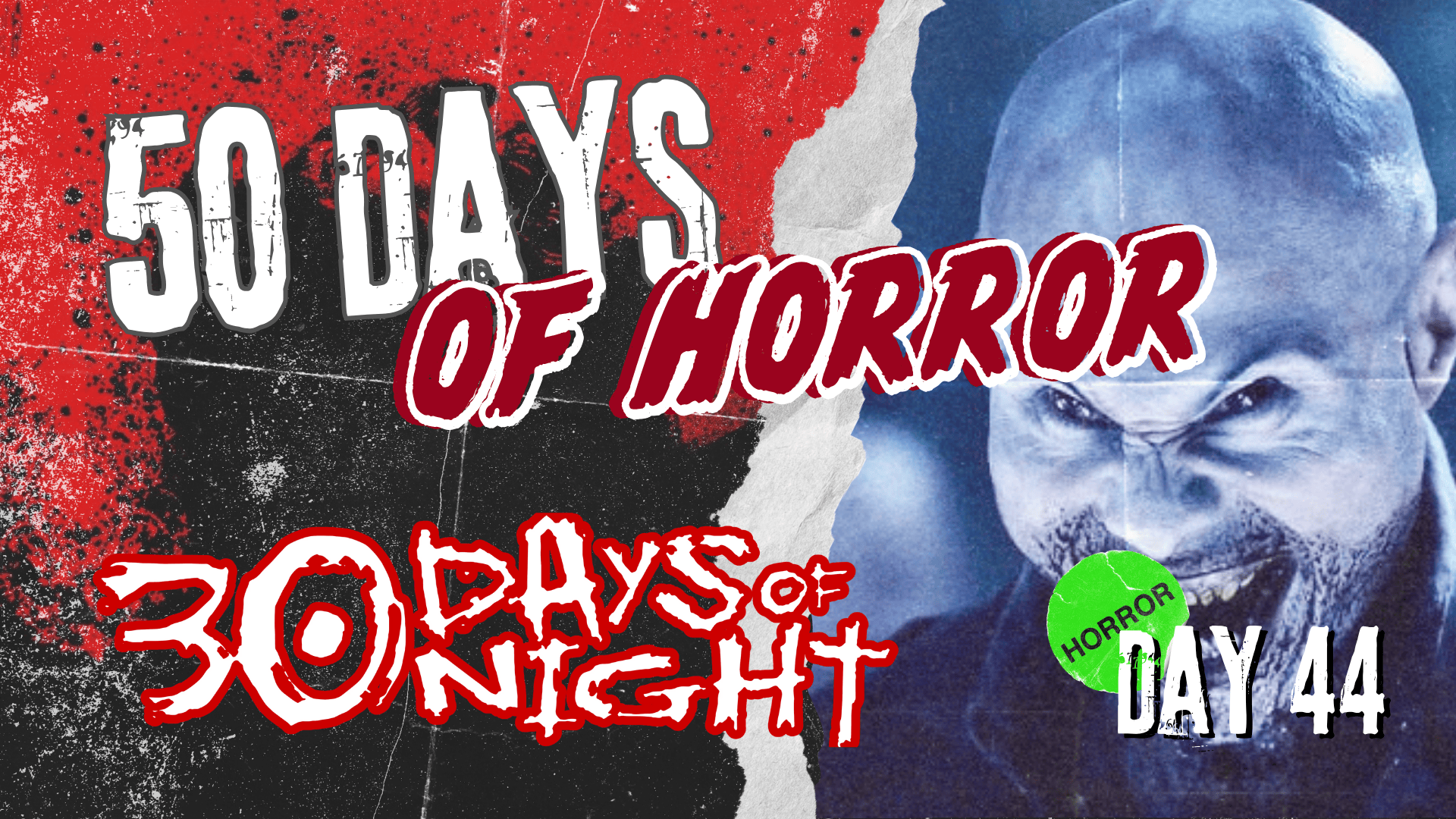
30 Days of Night (2007) | 50 Days of Horror, Day 44
Day 44 of 50 Days of Horror: David Slade's 30 Days of Night drops feral, click-speaking vampires on an Alaskan town during the polar night, and still might be the coldest, meanest vampire movie ever made.

Here's a fun bit of movie math. The real town the film is set in, Barrow, Alaska, which has gone by its older Iñupiat name, Utqiaġvik, since a 2016 vote, doesn't actually have a 30-day night. In 2020, the National Weather Service counted 66 days between the sun setting on November 18 and its return on January 23, and even then it wasn't pitch black, just a long, bruised twilight. So the film's title is a mercy. Thirty days is a number a screenwriter could survive, and apparently a number a vampire could happily work with.
That's the setup of David Slade's 30 Days of Night: a town at the top of the world, the last plane out, a sun that won't return, and something hungry that's been waiting for exactly this. It came from a 2002 comic miniseries by Steve Niles and Ben Templesmith, and Slade has said he read the single issues as they came out and loved their "punk rock, three-chord jam track" energy. You can feel that in the film. It's not trying to be an epic. It has one idea, and it plays that idea like a riff.
What sets it apart from every other vampire movie of its era is the monsters themselves. This is not Count Dracula in a velvet cape, and it's a long way from the flirty, slick-haired crew in The Lost Boys. These vampires, led by Danny Huston's Marlow, move like a pack, communicate in clicks and hisses, and treat a human town like a pantry. Slade says he wanted an old language that sounded like no one's accent, so he worked with a linguist and the University of Auckland to invent one, with simple words like "kla," which reportedly meant blood and meal at once. He also had his vampire performers, many of them dancers and stunt performers, develop their own movement language, and he's said they policed each other's behavior on set. Huston, by the way, was Slade's insistent first choice for Marlow, and he stuck with that until the studio agreed. It paid off. Huston gives the film its most unsettling moments simply by being patient.
On the human side, Josh Hartnett plays Eben Oleson, the town sheriff, as a tired, practical man who's out of his depth and knows it, and Melissa George plays his estranged wife Stella, whose presence gives the story a pulse beyond the body count. Ben Foster turns up as the Stranger, a human harbinger who arrives before the trouble does, and Mark Boone Junior and Manu Bennett add a lived-in, small-town texture to a group of survivors who feel like neighbors. The relationship at the center of the film is the quiet engine, and the film's most moving beats come from watching two people decide what they'll do for each other.
The craft is where it earns its reputation. It was shot in New Zealand rather than Alaska, with Jo Willems behind the camera and creature and makeup work from Weta Workshop. A Fangoria review at the time praised Slade for skipping digital action in favor of practical effects and for a long overhead tracking shot that shows he's as comfortable with large-scale mayhem as he was in his debut, Hard Candy. That's the kind of image that lingers: a town seen from above, small and exposed, while something moves through it. Brian Reitzell's score, eerie one minute and jumpy the next, keeps you on edge, and Slade has talked about color being central to the film's tone, which you can see in how every drop of red looks like a mistake against all that snow.
Reception was lukewarm, and I think that's worth being honest about. It earned about $75 million on a $30 million budget and opened at number one with roughly $16 million, but critics split, landing at 50 percent on Rotten Tomatoes and 53 on Metacritic, and audiences gave it a C on CinemaScore. Roger Ebert's 2.5-star review called it "well-made, well-photographed, and plausibly acted, and is better than it needs to be," which is a pretty good summary of why it's lasted. A direct-to-video sequel, Dark Days, followed in 2010, with Stella recast, but the original is the one that stuck.
If you've been following this countdown, you'll see where it sits. It shares the "no one is coming to help" feel of The Thing (2011), and like Alien, it's about a small group cut off from the world while something patient picks them apart. The difference is that here the cold is only half the problem.
If a high-contrast, black-and-white, blood-on-snow look is your idea of a good time, the Nightmare Logic line lives in the same neighborhood: monochrome, stark, and warped in a way that looks like a language you almost understand. It's for people who like their horror clean, cold, and a little feral.
So here's what I keep wondering. Most vampire stories ask whether you'd want to be one. This one asks whether you'd survive being dinner. When the sun doesn't come up and the phones go dead, which would you rather be in that town: the sheriff making the hard calls, or the one who decides to stay quiet and hide?
Part of the 50 Days of Horror series.