
The Thing (2011) | 50 Days of Horror, Day 31
Day 31 of 50 Days of Horror: The 2011 prequel to Carpenter's The Thing shows what happened at the Norwegian camp, and the tug-of-war between practical and digital effects is half the story.

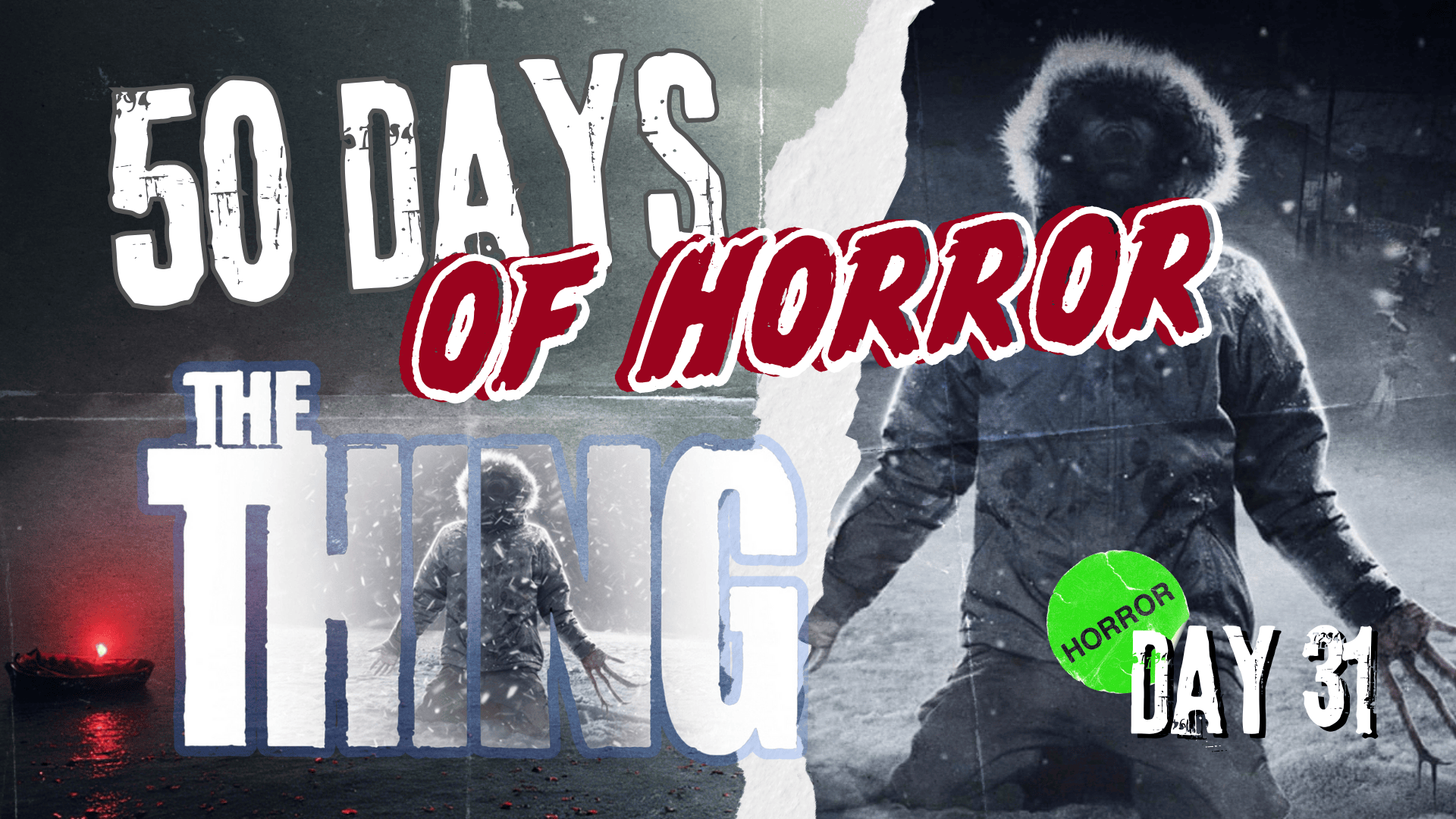
If you've seen John Carpenter's The Thing, you remember the first few minutes: a helicopter chasing a dog across the snow, a man firing a rifle from the air, and a group of Americans who have no idea what they're looking at. The 2011 prequel exists to answer one question. Who were those people, and what happened to their camp before the dog ever reached anyone else's door?
That's a tough assignment, and the movie knows it. Prequels are stuck with a rule that makes ordinary suspense almost impossible: we already know how this ends. Everything at the Norwegian Thule research station, set in Antarctica in 1982, is a countdown to a place we've already been. So instead of trying to surprise us with the destination, the film leans on the trip, and the pleasure comes from watching it stitch itself into the original. Lars, the dog handler, turns out to be the man with the rifle, and the helicopter pilot is a face we've glimpsed before. When those pieces click, it's a genuinely fun bit of connective tissue.
Mary Elizabeth Winstead is the best reason to watch. Her Kate Lloyd is a young scientist pulled into the dig, and she isn't written as a soldier or a tough-guy substitute. She's smart, wary, and just stubborn enough to notice things the men around her are too busy arguing to see. The film's version of a paranoia test is smart too: rather than recycling Carpenter's blood sample trick, Kate figures out that the creature can't copy anything that isn't organic, so she starts checking people's teeth for fillings. It's a small, clever idea that gives the story its own fingerprint, and it creates a nasty little sequence where everyone has to stand there and open their mouths. Joel Edgerton, as the pilot Sam Carter, gives her a solid partner, and Ulrich Thomsen's Dr. Sander Halvorson makes a good scientist-turned-liability, the kind of man who sees a miracle where everyone else sees a threat.
The creature work is where the movie gets complicated, and it's worth knowing the backstory. The monsters were designed and built by Amalgamated Dynamics, the effects house behind a long list of creature movies, using animatronics, makeup, and puppetry. After test audiences reacted badly, the studio had much of that work covered up with computer-generated effects, and director Matthijs van Heijningen Jr. has since said he regrets that decision. That's the tragedy of this film. You can see the craft peeking out around the edges, and then see the digital polish smoothing over it, and the result sits in a strange middle ground. Fans have campaigned for years for a version with the original practical work restored, and as far as I can tell it has never been released.
The numbers weren't kind either. The movie cost around $38 million and brought in roughly $31.5 million worldwide, and critics were lukewarm, though it's amusing to note that Roger Ebert gave it the same two-and-a-half stars he gave Carpenter's film. It has aged better than that reception suggests, mostly because the central idea is so durable. Isolation, contagion, and the creeping suspicion that the person next to you might not be who they seem all travel well, and the film has the good sense to play them straight.
If you collect, the 2012 Blu-ray has a few extras worth hunting for. There's a featurette called The Thing Evolves that shows off many of the practical effects, a look at the fire stunts called Fire & Ice, some deleted scenes, and a commentary with van Heijningen and producer Eric Newman. There's also a two-movie collector's edition that pairs it with the 1982 film. The best way to enjoy it is in tandem, with the original cued up right after. The prequel stops at the edge of Carpenter's first scene, and the handoff is half the reason to watch.
Here's what I keep wondering: if the practical-effects version ever does surface, will it change how people feel about this movie, or is the real story just that some films are better remembered for what they were meant to be?
Part of the 50 Days of Horror series.