
Halloween 5: The Revenge of Michael Myers (1989) | 50 Days of Horror, Day 30
Day 30 of 50 Days of Horror: Halloween 5 is the franchise's messy, rushed, strangely lovable oddball, with a psychic link, a mystery man in black, and an October mood that still works.

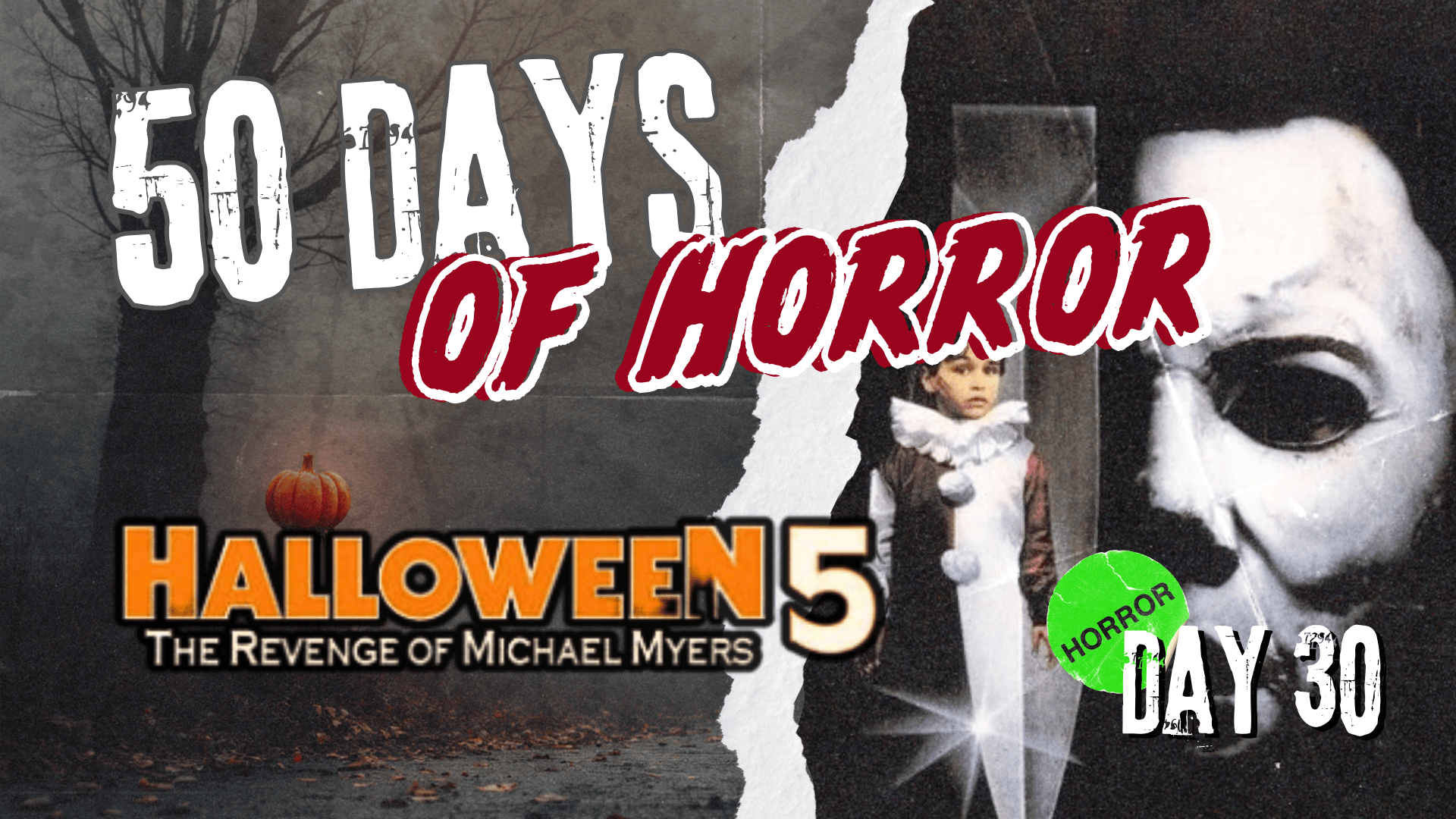
Every long-running series has a black sheep, and Halloween 5 is ours. It arrived in October of 1989, only a year after Halloween 4 brought Michael Myers back from the dead, and the production clock was ticking so loudly that the script was still being revised when cameras started rolling. You can feel that in the finished film. It lurches, it swerves, it asks questions it has no plans to answer. It also happens to be one of the best-looking autumn movies of the whole franchise, which is exactly why people keep sneaking back to it.
Start with where it picks up. Michael is supposedly gone after the finale of the last film, and Jamie Lloyd, the little niece he was hunting, has been left so shaken that she can't speak. That's the real hook of the sequel: it's a movie about a kid who's connected to a killer in a way nobody can explain. Danielle Harris carries a huge amount of the film on a child's shoulders, and her scenes with Donald Pleasence's Dr. Loomis are the best thing in it. Pleasence plays Loomis as a man so consumed by the case that he's started to look a little feral himself, and the movie leans into that, using Jamie as bait with a conviction that's equal parts desperate and unnerving.
The psychic link is where audiences split, and it's still arguing itself out three decades later. Jamie senses when Michael is hurting people, and she feels his presence in a way that turns the series away from simple stalking toward something stranger. Director Dominique Othenin-Girard pushed the story in that direction, adding the telepathic connection after reading the draft, and whether you love it or roll your eyes, it's a real attempt to say something new about the Myers myth. Then there's the Man in Black, a figure who pops up a few times and never gets explained. Think of him as the film's ghost: a loose thread left hanging that the next installment would pick up.
The look of it is where the movie wins me over every time. Haddonfield is played by Utah, and the shoot moved through Salt Lake City, Provo, and Ogden, but you'd never know it from the frame. The streets are wet, the nights are soaked in blue, the porches are crowded with pumpkins, and every yard looks like it has its own scarecrow. The score by Alan Howarth keeps Carpenter's themes humming underneath a more mechanical, colder palette, and the whole package feels like October in a bottle. The mask is a slightly different beast too, weathered and a little discolored, designed by Greg Nicotero, and it gives Don Shanks' Michael a battered, oddly human look. Fans will argue about it forever, which seems about right.
Let's be fair about the rest. The pacing wobbles, some of the humor lands like a dropped tray, and a couple of the new characters seem to have wandered in from another movie. The violence has teeth, though. The laundry chute sequence is a nasty piece of business that originally earned the film an X rating before cuts, and the barn scene packs a punch. Critics mostly hated it at the time, and it was the least-attended film in the series, which makes its slow rise in the fan community feel almost like a rescue mission.
For collectors, this is a good one to chase. Scream Factory's 2021 Collector's Edition comes from a new 4K scan of the original negative and includes both older commentaries, a forty-four-minute making-of called Dead Man's Party, a short piece with cinematographer Robert Draper on how they built the film's look, a location tour called Horror's Hallowed Grounds, and an alternate opening that shows the series was still figuring out what it wanted to be. Keep the blacks deep and let that synth score breathe. It rewards a good speaker setup, and it plays best alongside Halloween 4 and Halloween 6 as the strange middle stretch of the saga.
I came away from this one wondering something that probably applies to a lot of this countdown: what makes a movie lovable when it isn't "good"? Earlier in this countdown we argued about whether Halloween Ends earned its title. Halloween 5 never earned much of anything, and yet it has more atmosphere in a single porch light than some better films manage in two hours. Which flawed sequel in your collection do you defend hardest?
Part of the 50 Days of Horror series.