
Halloween Ends | 50 Days of Horror, Day 24
Day 24 of 50 Days of Horror: Halloween Ends turns inward, trading body count for a study of how evil passes from one person to the next like a contagion.

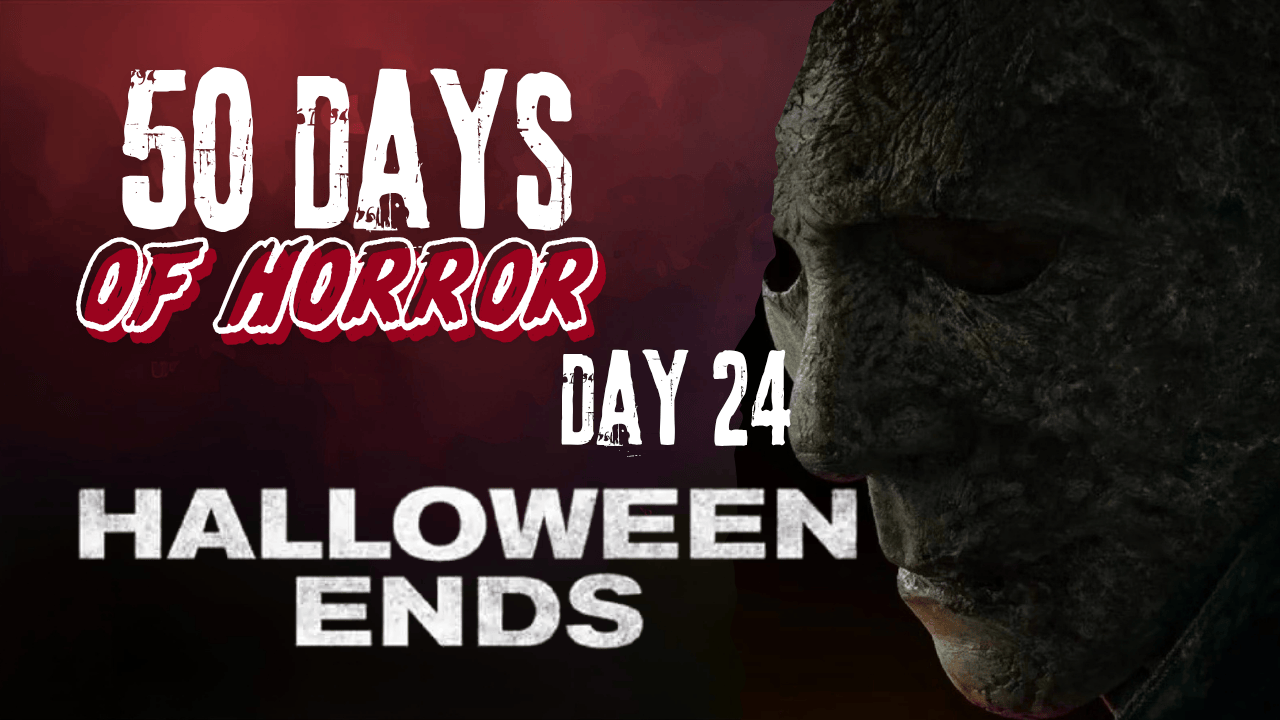
No film in this countdown has split a fanbase as cleanly down the middle as night twenty-four's pick. Halloween Ends isn't interested in chasing a body count or hitting the nostalgia beats one more time. It turns inward instead, and that single decision is why people are still arguing about it.
Where the earlier films in this trilogy kept their focus wide — open streets, long chases, a shape moving through them — this one narrows everything down to a claustrophobic study of grief, guilt, and what gets left behind in a small town long after the cameras would normally cut away. Garages, workshops, diners, kitchens — ordinary rooms that sit there simmering with tension until they don't anymore. The violence, when it finally arrives, lands as a shock precisely because the film has spent so long sitting still. You can feel the restraint in almost every scene, and you can feel that the restraint is a choice, not a budget limitation.
The idea underneath all of it is the most interesting thing the series has attempted in decades: evil as something closer to a contagion than a person. The fear doesn't stay contained to one house, one victim, one night — it moves, it gets passed along, it re"shapes" whoever picks it up next. That's a genuinely unsettling way to frame a slasher villain who started out, back in 1978, as something almost elegantly simple. By the end of this trilogy, he's stopped being a man at all. He's an idea a town can't stop circling back to, which is a little bit of a mirror pointed right back at anyone who's kept watching, rewatching, and dissecting this character across five decades. We can't quite let go of him either.
That's also exactly why this one divided people. A lot of viewers came in expecting a final confrontation between two familiar faces and got something stranger instead — a film more concerned with inheritance and obsession than a showdown. It's not the ending some wanted. But it's an ending that feels genuinely human: imperfect, scarred, uneasy even in its quiet stretches, which might be the most honest way a story like this one could actually close.
If you're queuing this up, the dynamic range matters more here than almost anywhere else in this countdown — whispers and heartbeats one minute, score swells and screams the next, and compressing that gap flattens exactly what the film is going for. A recent 4K presentation handles this well, with clean shadow detail and a mix that keeps Carpenter's score humming underneath without burying the quieter moments around it. If you own the full trilogy, this is also one worth watching in sequence rather than on its own — the emotional throughline reads a lot clearer as one long descent than as a standalone finale.
So: does it earn the title, or does it dodge the ending people actually wanted? That argument is half the reason this one's worth watching in the first place.
Part of the 50 Days of Horror series.