
The Ring (2002) | 50 Days of Horror, Day 42
Day 42 of 50 Days of Horror: Gore Verbinski's The Ring takes a Japanese ghost story, soaks it in Pacific Northwest rain, and gives us a cursed videotape, a ringing phone, and seven days to live.

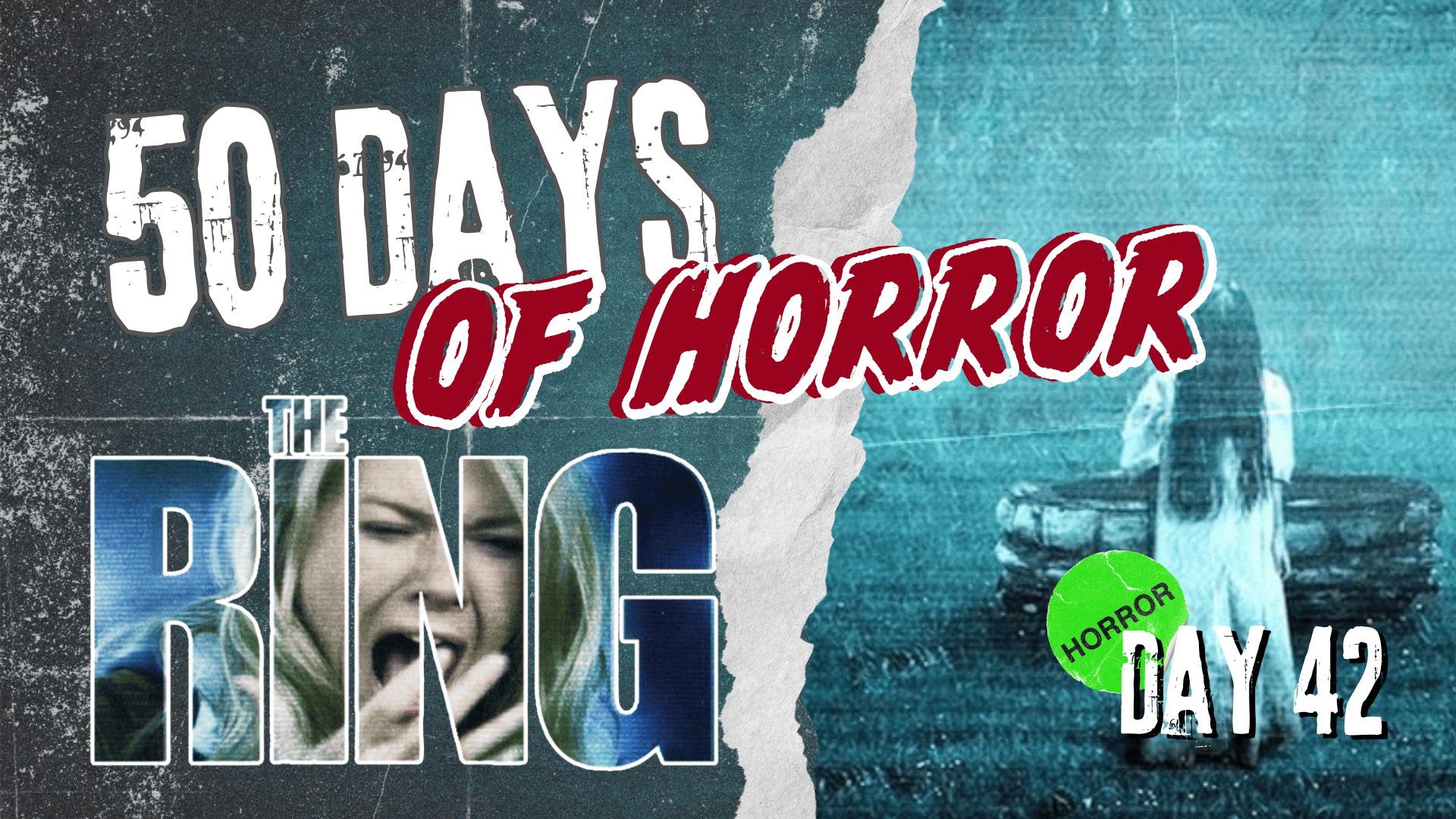
Here's a detail I love about The Ring: the circle is hiding everywhere. According to the production notes, ring motifs were worked into the sets, in carpet and wallpaper patterns, kitchen knobs, even Rachel's apartment number. Once you know that, the whole movie changes. You stop watching the story and start hunting the frame, and a film that already feels like it's watching you gets even better at it.
That kind of patient, sneaky craft is what made Gore Verbinski's 2002 film such an odd success. The premise is simple enough to say in one breath. A strange videotape circulates, anyone who watches it gets a phone call, a whisper says "seven days," and then the clock starts. Naomi Watts plays Rachel Keller, a Seattle journalist who gets pulled into the mystery when her niece dies, and she plays it as a woman whose curiosity is slowly turning into a trap. Martin Henderson and a young David Dorfman, as her son Aidan, give the story a human cost, and Brian Cox shows up with the kind of presence that makes a few minutes of screen time linger.
The film is a remake of Ringu, the 1998 Japanese hit directed by Hideo Nakata from Koji Suzuki's 1991 novel, and it's a remake with its own point of view. Verbinski has said he first saw Ringu on a rough VHS copy, and that the poor quality added to its mystique, which is a perfect origin story for a film about a haunted tape. He also estimated the American version changed up to half of the original's story, though that's his guess rather than a measured count. Even Watts, who had trouble tracking down a copy of Ringu while shooting in Wales, watched it once, alone, on a small hotel-room TV, and that was enough to get her excited.
What really sets this version apart is the atmosphere. Most of the film was shot around Washington state, with a lighthouse sequence filmed at Yaquina Head in Oregon, and the crew reportedly got near-daily rain. Cinematographer Bojan Bazelli leaned into the flat, overcast light, softening the shadows so the characters seem to float in the gloom. Production designer Tom Duffield pulled from Andrew Wyeth's muted, somber palette. The result is a world that feels permanently damp and permanently tired, where daylight looks like a bad sign. Hans Zimmer's score, built on strings and piano and a recurring Dies irae theme, does the rest.
There are small, strange production stories too. The lone maple tree from the cursed tape, nicknamed "Lucille," was a fake built from steel tubing and plaster, and wind reportedly knocked it over several times. The script was reportedly still unfinished when cameras started rolling. Chris Cooper filmed two scenes meant to bookend the movie, but they were cut after test audiences found his disappearance distracting. Even Henderson recalled worrying early on that the footage wouldn't be scary enough, saying "this is embarrassing, people are going to laugh."
They weren't laughing. The film cost about $48 million and grossed about $249 million worldwide, and it kicked open the door for a wave of American remakes of Asian horror: The Grudge, Dark Water, Pulse, and plenty more. If you've been following this countdown, you can see the family resemblance to Shutter, another haunting threaded through a piece of everyday technology, and to the remake boom that also gave us The Texas Chainsaw Massacre. Critics were split. Rotten Tomatoes sits at 72 percent, Roger Ebert gave it a thumbs down and called it "borderline ridiculous," while Richard Roeper gave it a thumbs up. I'm with the fans who love its eerie mood, even if the plot logic gets a little foggy. It works more like a ritual than a puzzle.
If that rain-soaked, static-hum, gray-on-gray mood is your language, the Nightmare Logic line speaks it fluently: monochrome, high-contrast, and distorted like a signal that's slipping out of tune. It's made for people who like their horror quiet, strange, and a little bit wet around the edges.
So here's what I'm curious about. The Ring made an entire generation look at a TV screen differently, and some of us still hesitate before pressing play on an old tape. What's one ordinary piece of technology that this film, or another, ruined for you for good?
Part of the 50 Days of Horror series.