
Stephen King's It (1990) | 50 Days of Horror, Day 39
Day 39 of 50 Days of Horror: Stephen King's It, the 1990 miniseries that put Tim Curry's Pennywise into living rooms and scared a generation with a Losers Club you'll never forget.

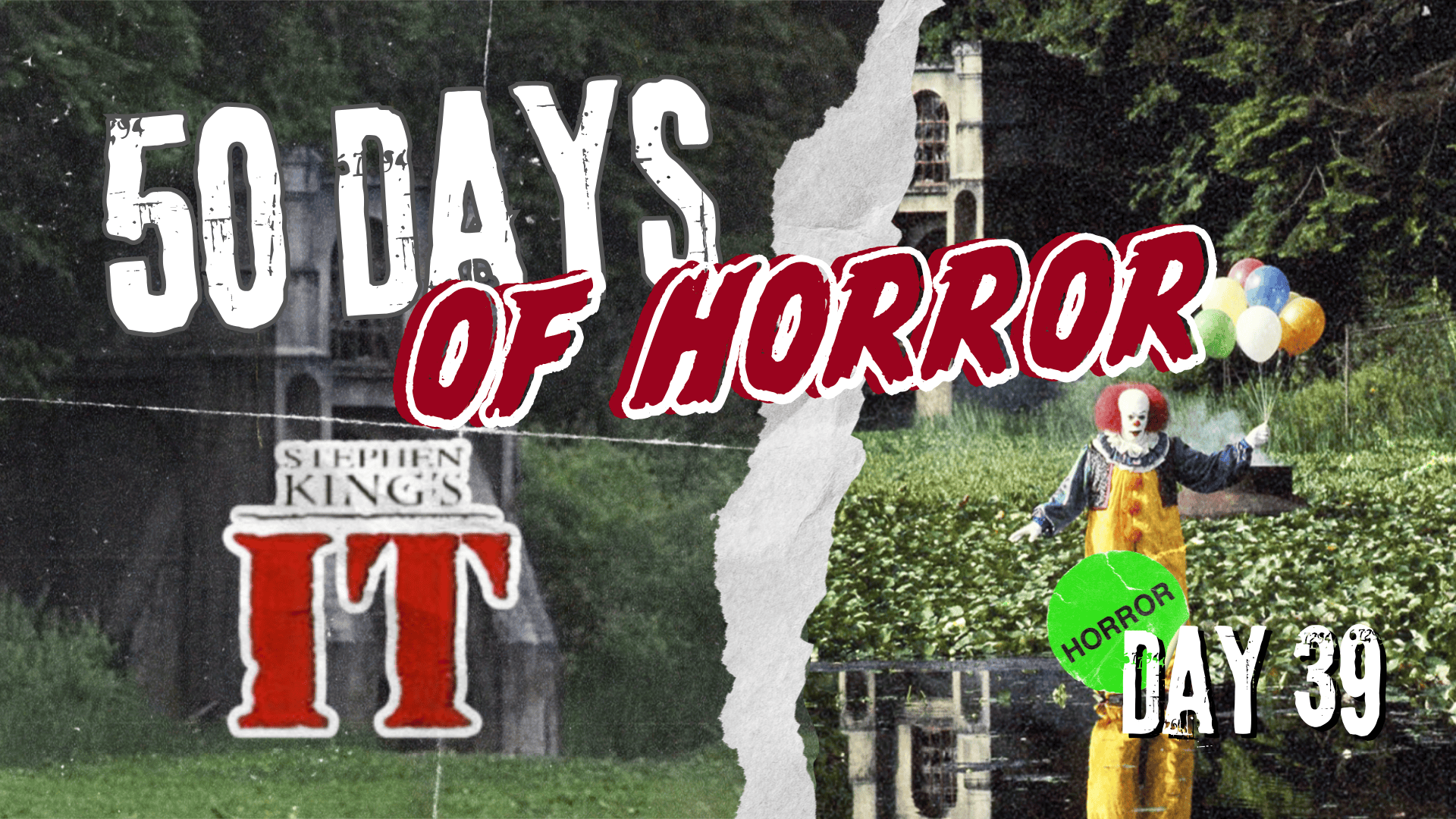
There was a time when a horror story could take over an entire week's worth of conversation, and the 1990 version of It is a big reason why. It aired on ABC across two nights in November of that year, and roughly 30 million people tuned in. That's a number modern horror can barely dream about. Think about what that means: a whole country sat down in front of the same television and agreed to be scared of a clown. It's the kind of shared experience we almost never get anymore, and it's part of why this one still feels so big.
The structure is what makes it work. Director Tommy Lee Wallace, who rewrote Lawrence D. Cohen's script, built the whole thing as a two-part story that alternates between 1960 and 1990. Half of it is about a group of kids in Derry, Maine, who get hunted by something that takes the shape of whatever frightens them most. The other half is those same kids, now adults, called back to finish what they started. That flashback structure gives the film a pulse that's equal parts horror and homesickness. You aren't just waiting for the next scare. You're waiting to see what the town did to these people, and what they've carried with them ever since.
The Losers Club is the reason it lands. The kid cast, with Jonathan Brandis, a very young Seth Green, Brandon Crane, Emily Perkins, Adam Faraizl, Marlon Taylor, and Ben Heller, feels like a real gang of friends: funny, scrappy, loyal, and scared of all the right things. Bullies, bad homes, and the dull ache of being small in a big, careless world are as present as any monster. The adult cast is a roll call of beloved television faces, including Richard Thomas, Harry Anderson, Dennis Christopher, Annette O'Toole, John Ritter, Tim Reid, and Richard Masur, and they bring a warmth and exhaustion that makes the reunion feel earned. There's real sadness in watching grown-ups try to remember the courage they had as kids.
And then, of course, there's Tim Curry. His Pennywise is one of the great horror performances, full stop. He plays the clown with a Bronx-flavored, improvised swagger, all gleaming teeth and yellow eyes, flipping from friendly party guest to something bottomless in the span of a smile. It's a performance built on charm, and the charm is the scariest part. He never needs to raise his voice. He just leans in, grins, and waits.
It's worth remembering how much this had to do with the limits of television. Broadcast standards meant gore had to stay mostly off screen, so even the infamous opening scene with little Georgie leaves the worst of it to implication. That restraint turns out to be a strength. What stays with you is a drain, a balloon, a voice in a storm sewer, and a feeling that something ancient is paying attention. The score by Richard Bellis, which won an Emmy for music composition, does a lot of that heavy lifting too, curling around the images like cold air. The production was shot in Vancouver over about three months, and the whole thing carries a soft, grainy, autumn-tinted look that feels like leafing through an old photo album with something unpleasant tucked between the pages.
Is it flawless? No, and the people who made it would probably say so too. The second half runs a bit slower, and the ending, with its giant spider, has been criticized by viewers, by members of the cast, and even by Stephen King himself. But there's something endearing about a movie that swings that big and lands as much as it does. It remains the version a lot of us grew up with, and for plenty of horror fans it's still the standard against which every other Pennywise is measured.
So here's what I'm curious about. Everybody has a different fear that the Losers Club's monster would have worn for them. What would it have looked like for you at that age, and does it still have the same grip today?
Part of the 50 Days of Horror series.