
The Conjuring (2013) | 50 Days of Horror, Day 38
Day 38 of 50 Days of Horror: James Wan's The Conjuring revived the classic haunted house story with patient craft, the Warrens, and a farmhouse that never lets the Perron family rest.

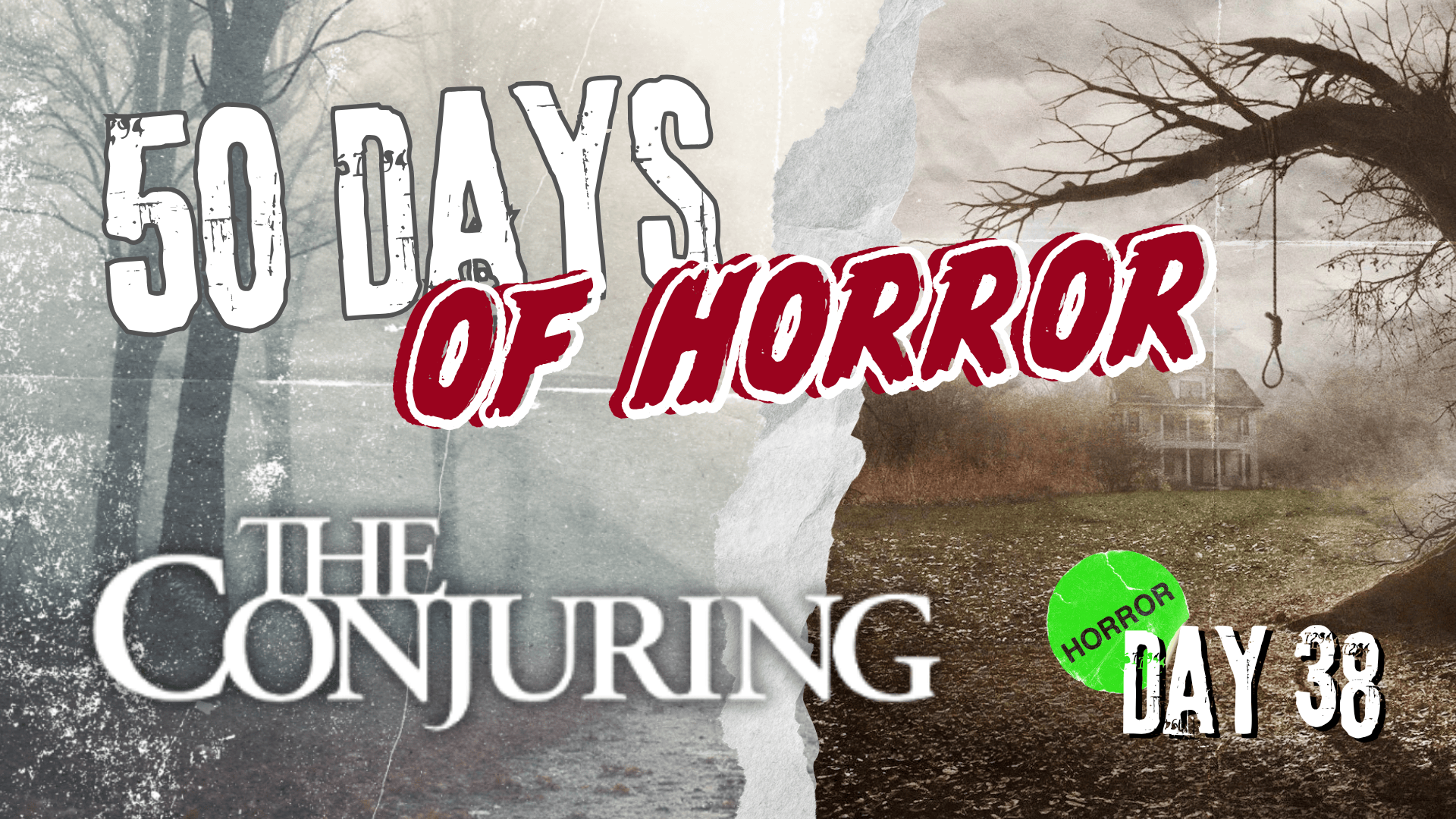
Here's a strange fact about The Conjuring: when it came time to rate it, the MPAA reportedly gave it an R for being too scary, and producer Walter Hamada has said there wasn't a single scene they could trim to get it down to PG-13. There's no gore parade here, no torture, nothing to cut around. The film got its R simply because it works. That tells you almost everything about what James Wan was going for in 2013.
Wan had made his name with Saw and Insidious, films with a gleeful appetite for shocks. The Conjuring is the work of a filmmaker who'd decided to slow down. It takes place in 1971, when Roger and Carolyn Perron move their five daughters into a Rhode Island farmhouse that's a little too affordable. Ron Livingston and Lili Taylor play the parents, with five young actresses playing the sisters, and the film spends real time making them feel like a family before it asks them to be afraid. The house starts small. A stopped clock, a smell, a door that won't stay shut, a dog that won't go inside. Then it learns the family's habits and starts to play.
Wan films all of this like an old-school director with something to prove. The camera glides through rooms, sets up wide shots so you always know where you are, and then lingers on exactly the spot where you hope nothing will happen. The sound design does enormous work, building terror out of knocks, creaks, and silence. The hide-and-clap game, where a blindfolded child is told to clap and listen for a reply, is the kind of scene that turns an ordinary parlor game into a nightmare. It works because it plays fair: you can see everything and it's still terrifying.
What gives the film its warmth, and its staying power, is the other couple at its center. Ed and Lorraine Warren were real-life paranormal investigators, and Patrick Wilson and Vera Farmiga play them with an unforced gravity that feels almost old-fashioned. They believe in what they do, they're gentle with the people they help, and they carry their own scars from it. That sincerity matters. The film never winks at the audience or undercuts itself with a joke, so when the Warrens bring their faith into a haunted house, you take it seriously. It's the same earnest streak that makes the best ghost stories feel true. The house, we learn, has a past, with ties to an accused witch named Bathsheba Sherman, and the film treats that history less like trivia and more like a wound that's never healed.
It was also a perfect storm commercially. Made for about $20 million and shot in chronological order over 38 days in Wilmington, North Carolina, it ended up grossing about $319.5 million worldwide, with critics broadly on its side. It launched what became the Conjuring Universe, with sequels, the Annabelle films like Annabelle: Creation, and The Nun. Not every entry has matched the original, but the original showed that a studio could still make a patient, atmospheric haunting and turn it into a franchise.
There's something about the setting that I think explains why it keeps pulling people in. An old farmhouse, a big family, a long winter, wallpaper that seems to remember everything that's ever happened in the room. If that gothic, lived-in, slightly cursed atmosphere speaks to you, the Nightmare Logic line has the same energy: monochrome, high-contrast, and a little warped.
I think the film endures because it believes in what it's showing you. The scares are built from timing and tone, not tricks, and it gives you people worth worrying about. By the time the final act arrives, you aren't watching a case file. You're watching a family fight for the only home they've got.
So here's my question for the haunted-house lovers: which moment in The Conjuring is the one you'd never agree to watch alone, and is it the one with the loudest scare or the quietest one?
Part of the 50 Days of Horror series.