
A Nightmare on Elm Street (1984) | 50 Days of Horror, Day 37
Day 37 of 50 Days of Horror: Wes Craven's A Nightmare on Elm Street turned sleep into the enemy, and gave horror Freddy Krueger, Nancy Thompson, and some of the most inventive practical effects ever filmed.

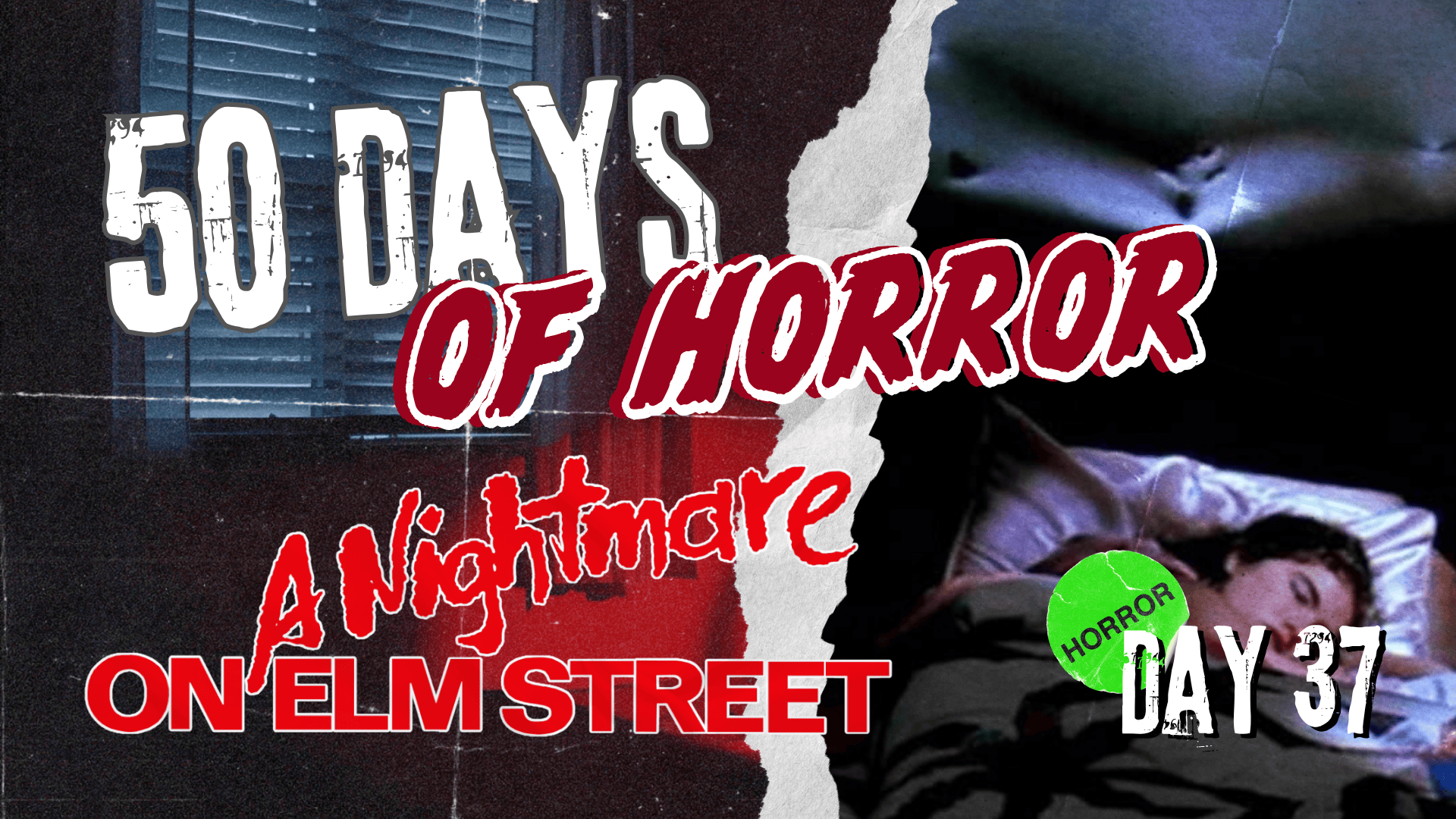
Some horror movies you admire. A Nightmare on Elm Street is one I fell for before I knew what I was falling for. I was nine the first time I saw it, and it did something no other movie had: it made the safest place in my world, my own bed, feel like the most dangerous. That's the trick Wes Craven pulled off in 1984, and it's the reason this film sits at the top of this countdown for me. Everyone sleeps. Nobody gets to opt out.
The idea behind it is almost embarrassingly good. Craven, who had come up through raw, rough-edged films like The Last House on the Left, took a premise rooted in real unease: stories about refugees who had survived terrible wars and then died in their sleep, according to the reporting that inspired him. From there he built a boogeyman out of the one place you can't lock a door. Freddy Krueger isn't a masked prowler lurking in the bushes. He lives in the part of your mind that doesn't answer to you. He was also never meant to be a joke at the start. Early on, the idea was far darker, and by the time it reached the screen he'd become a child murderer, a burned figure in a fedora and a dirty striped sweater whose blade-fingered glove could slide into a bathtub and make an ordinary Tuesday evening feel like the end of the world. Craven even said he named him after a kid who'd bullied him back in school.
And then there are the effects, which are still jaw-dropping. This was made for around $1.1 million, and nearly everything you see was built by hand. The staircase that turns to goo was reportedly made with pancake mix. The spandex wall that bulges around Freddy's face is a stroke of genius, a stretchy, pulsing, wrong-looking surface that sells the idea of a nightmare pressing against reality. Then there's the room that spins. When Tina's night goes catastrophically wrong, the camera rotates with her and the blood runs up the walls and across the ceiling, and it still plays like a magic trick even though you know how it's done. Every one of these moments looks like it could only exist in a dream, which is the whole point.
What really keeps the film standing, though, is Nancy. Heather Langenkamp plays Nancy Thompson not as a victim but as a detective, a strategist, and finally the one who walks into the boiler room on her own terms. She notices patterns, she stays awake, and she works out the rules. When the film turns and she pulls Freddy out of her dream, the whole genre shifts a little. If you want a blueprint for what a modern final girl looks like, this is where you start. The cast around her is a time capsule too: Robert Englund finding the voice and swagger of Freddy, John Saxon and Ronee Blakley as the parents who know more than they say, and a young Johnny Depp making his film debut as Glen. Charles Bernstein's synth score threads through it all like a lullaby that's been left out in the rain.
Underneath the effects and the one-liners, there's a story about guilt. The adults on Elm Street did something terrible, they buried it, and the kids are the ones paying the bill. That's what gives the film its weight. It's a fairy tale about a town that refuses to talk about its past, and a monster that comes for the children because the parents wouldn't deal with it.
It's also lasted, in a way few horror films manage. The movie reportedly earned about $57 million worldwide on that tiny budget, launched a franchise that changed New Line Cinema's fortunes, and in 2021 was selected for the National Film Registry by the Library of Congress. Think about that for a second. A movie about a burned man with knives for fingers is now officially part of America's cultural heritage.
Part of the reason I love it is that it taught a whole generation of horror fans how to think in dreams. If that kind of dream logic is your language, the Nightmare Logic line is built for you. It's the born of the same energy that Craven's film has on me.
So here's what I'm curious about. When you think back on the first time you saw Elm Street, what was the first image that burrowed into your head and stayed there, and did it change how you felt about going to sleep?
Part of the 50 Days of Horror series.