
The Last House on the Left (1972) | 50 Days of Horror, Day 27
Day 27 of 50 Days of Horror: Wes Craven's The Last House on the Left is a raw, confrontational landmark that dares you to question why you watch violence, and what revenge costs.

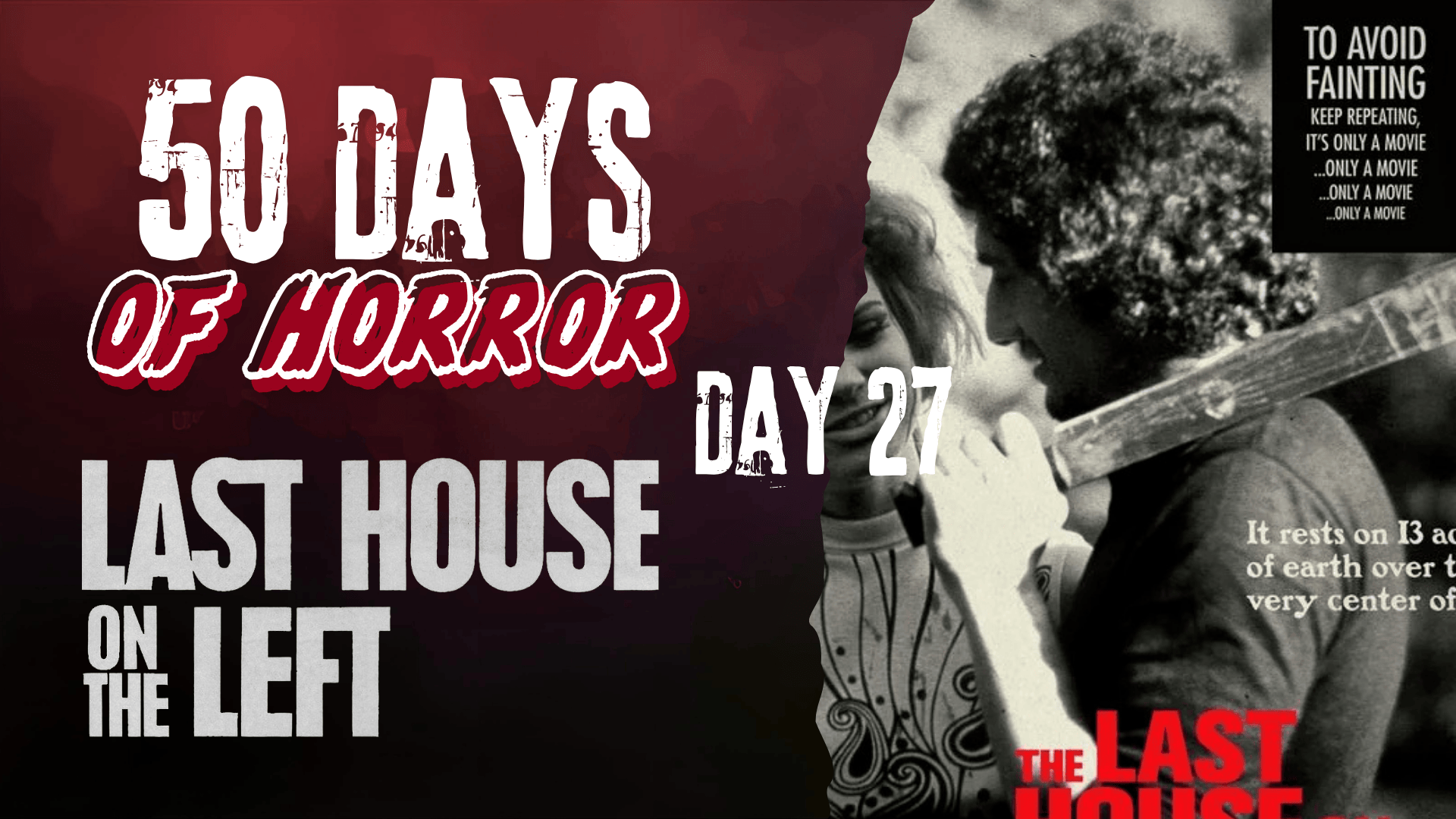
Some nights in this countdown are about fun. Night twenty-seven is not one of them, and I'd rather say that up front than pretend otherwise. Wes Craven's The Last House on the Left is a hard film, and it's hard on purpose. If tonight isn't the right night for it, that's a perfectly good reason to bookmark it and come back when it is.
Long before Freddy, before the sequels, before anyone thought of Craven as a brand, he was a first-time filmmaker with a tiny budget and a very uncomfortable question: what happens when the camera stops flattering the violence? Producer Sean Cunningham backed him, and the two of them built a story loosely descended from Ingmar Bergman's The Virgin Spring, a medieval tale of a crime and a father's revenge, and dragged it into the early seventies. Two teenage girls head out for a concert. They never make it. What follows is ugly, clumsy, and genuinely upsetting, and the film never offers you the escape hatch of "slick" filmmaking.
The strangest choice is the tone. Scenes of real cruelty sit right beside bumbling-cop comedy and chirpy folk songs, and the whiplash is sort-of the point. The movie keeps pulling the rug out from under whatever mood you've settled into. You laugh, then you feel sick about laughing. That's not a flaw in the editing. That's the experiment, and it works precisely because it's so uncomfortable to sit inside.
It also helps to remember what was happening in the world when it came out. Americans were watching Vietnam in their living rooms every night, real footage of real violence sandwiched between commercials. Craven took that numbness and forced it back into fiction, with nothing to cushion it. The result is crude and abrasive, and it feels like a nerve being pressed. Once the revenge arrives, the film refuses to hand you a clean victory. Every payback beat holds up a mirror and asks whether getting even makes anyone better than the people they're punishing.
You can trace a lot of horror back through this very doorway. The grit and moral erosion that later fed The Texas Chain Saw Massacre and I Spit on Your Grave, and eventually the harder-edged psychological horror of the modern era, all owe something to this film proving that audiences could be made to confront what they usually look away from. Not every descendant earned the lesson, but the lesson is still here at the root.
For collectors, this is the rare case where a rougher image is the right image. Go for a transfer that keeps the grain and grime, because anything scrubbed clean would be working against the whole idea. The Arrow and Blue Underground releases are the benchmarks, and if your edition includes archival interviews with Craven or Cunningham, keep them. Hearing how unprepared they were for the backlash adds real context to a movie that was never meant to be comfortable. This is a disc you archive for history, not one you upgrade for sharpness.
It's also the contrast piece of this countdown. Coming after a run of crowd-pleasers, it resets your sense of what horror can be asked to do, and it quietly changes how the rest of the lineup plays.
So here's the question I'm genuinely curious about: do you think a film like this is still doing something necessary, or has the genre learned everything it had to teach and moved on?
Part of the 50 Days of Horror series.