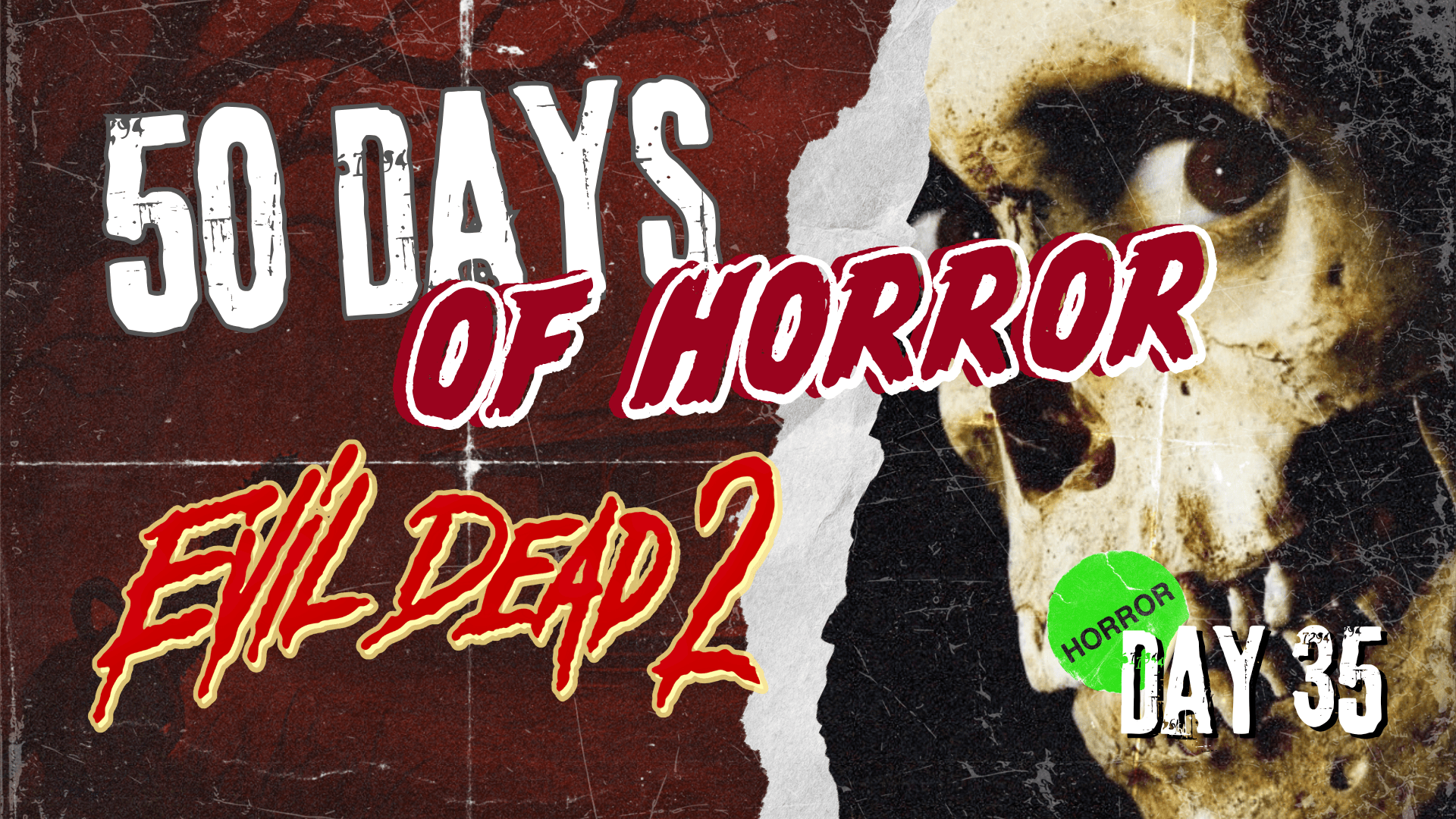
Evil Dead II (1987) | 50 Days of Horror, Day 35
Day 35 of 50 Days of Horror: Sam Raimi's Evil Dead II blends slapstick and splatter into a manic cabin-in-the-woods classic, with Bruce Campbell fighting his own hand and a laughing room.

There's a moment in Evil Dead II that I'd put up against any scene in the genre. Ash is alone in a cabin that has finally broken him, and the room begins to laugh. The lamp, the deer head, the shelves, the very furniture: everything on screen starts cackling, and Ash, after a beat of pure panic, starts laughing right along with it. It's terrifying and ridiculous at the same time, and it works because the film never pretends those two feelings can't coexist. Fun fact: the idea reportedly grew out of co-writer Scott Spiegel doing a Popeye-style laugh with a gooseneck lamp, which tells you everything about how this movie was made.
That's the spirit of the whole thing. Sam Raimi's first Evil Dead was a scrappy, grimy piece of survival horror. For the follow-up, he got a real budget, though not by much, about $3.5 million with Dino De Laurentiis financing, and a lot more confidence. The result is part sequel and part do-over. It opens by quickly replaying the setup of the first film, with Ash and his girlfriend Linda heading to a remote cabin where a tape recorder plays words from the Necronomicon, the Book of the Dead, and something in the woods wakes up. Then it shoves everything into overdrive. Before long, Ash is alone, his hand has turned against him, and the film is a one-man war against furniture, forest, and his own limbs.
What Raimi realized is that horror and slapstick are cousins. A scream and a pratfall both live on timing, and he stages the chaos like a silent-movie comedy filmed through a nightmare. Bruce Campbell does extraordinary work here, throwing himself around the set with the elasticity of a cartoon character, getting walloped, dragged, and drenched, and somehow never losing his hapless dignity. It's some of the most committed physical comedy in the genre, and it's also what makes the horror stick. You laugh because it's absurd, then you wince because it's Ash, and by the time he's got a chainsaw strapped to his arm, you'd follow him anywhere.
The camera deserves a mention, because it's practically a cast member. Raimi's lens swoops through the woods, races through hallways, and hurls itself at its subjects like it's hunting them, and the film has a restless, hand-built energy that makes every shot feel like an experiment. Mark Shostrom handled the makeup effects, with a lot of stop-motion work mixed in, so the carnage has a handcrafted, almost cartoonish texture that keeps it from ever feeling mean. The supporting cast pitches in too. Sarah Berry and Dan Hicks arrive as new faces in the cabin, Kassie Wesley and Richard Domeier turn up in the thick of things, and Ted Raimi, the director's brother, is under the makeup as the possessed Henrietta. It all feels like a group of friends making something they know is a little unhinged.
The business side was just as strange. The film was released unrated because the distributor wanted to avoid an expected X rating from the MPAA, and it earned just under $6 million worldwide. It was a modest hit at best, which makes its legacy even better. Critics eventually came around, the cult grew, and the story that begins here pushes Ash back through a swirling vortex into the Middle Ages, setting up the next film. A movie that barely made its money back became one of the most loved horror-comedies there is.
There's an almost tragic note under the jokes, too. By the end, Ash is battered, soaked in gore, armed with a chainsaw and a one-liner, and what he's survived is clearly changing him. He isn't just a victim anymore, and the film seems genuinely fond of him for it. I think that's why it keeps pulling people back. It's a story about someone who refuses to quit, told by people who obviously loved every ridiculous minute of making it.
If the film's wild, warped, hand-drawn-by-a-lunatic energy speaks to you, the Nightmare Logic line is built from the same instinct: monochrome, high-contrast, distorted type that looks like it's been clawed out of a book. It's gothic horror with the volume turned up, and it's the kind of thing Ash would find in the cabin.
Which brings me to the question I keep asking about this one: when the whole room starts laughing, is Ash losing his mind, or is he finally the only person in the cabin who gets the joke?
Part of the 50 Days of Horror series.