
Why Personal Food Projects Still Matter in Commercial Food Photography
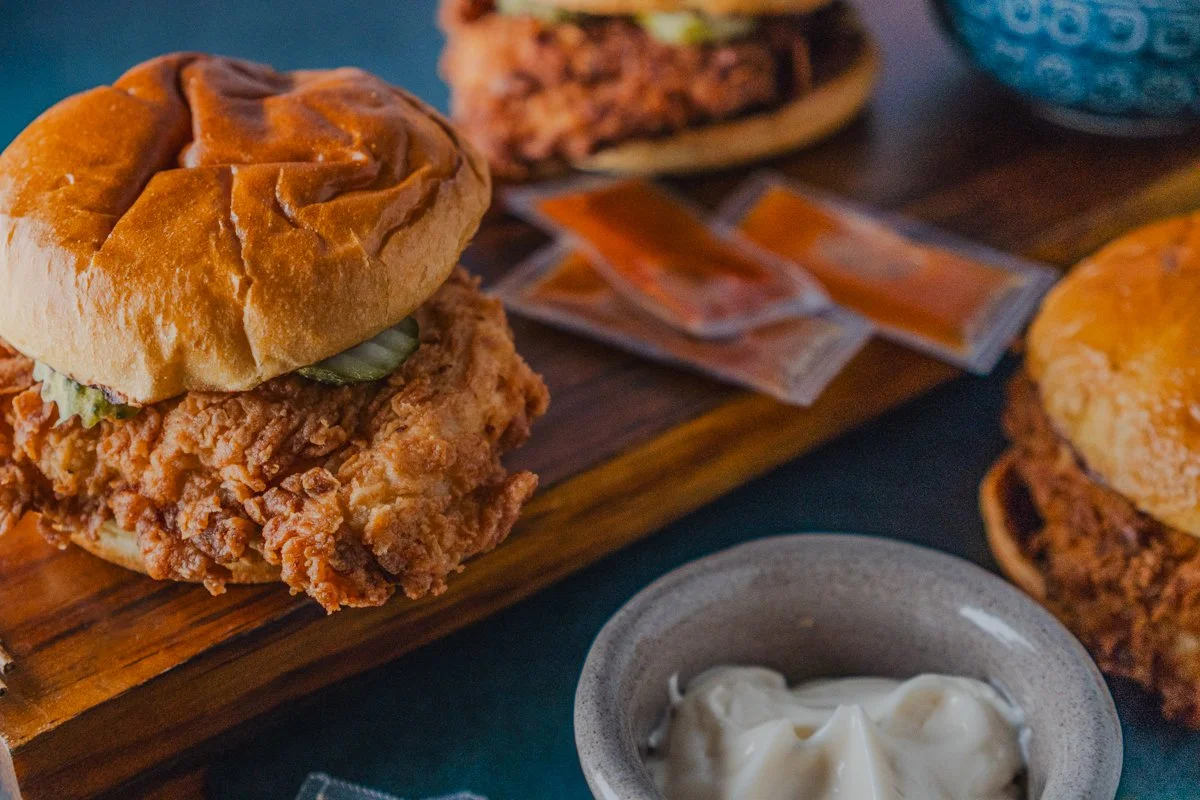
Personal food projects are often where commercial instincts are sharpened first.
Long before an image is made for a client, decisions about light, restraint, texture, and mood are tested in self-assigned work. This is why personal projects still matter in commercial food photography.
This chicken sandwich wasn’t created for a brand brief or a menu rollout. It existed because it was Sunday, Chick-fil-A was closed, and the idea lodged itself in my head. I wanted the sandwich — and I wanted to make it properly.
What followed wasn’t casual cooking. It was a familiar process: intention, repetition, refinement.
The sandwich as a working exercise
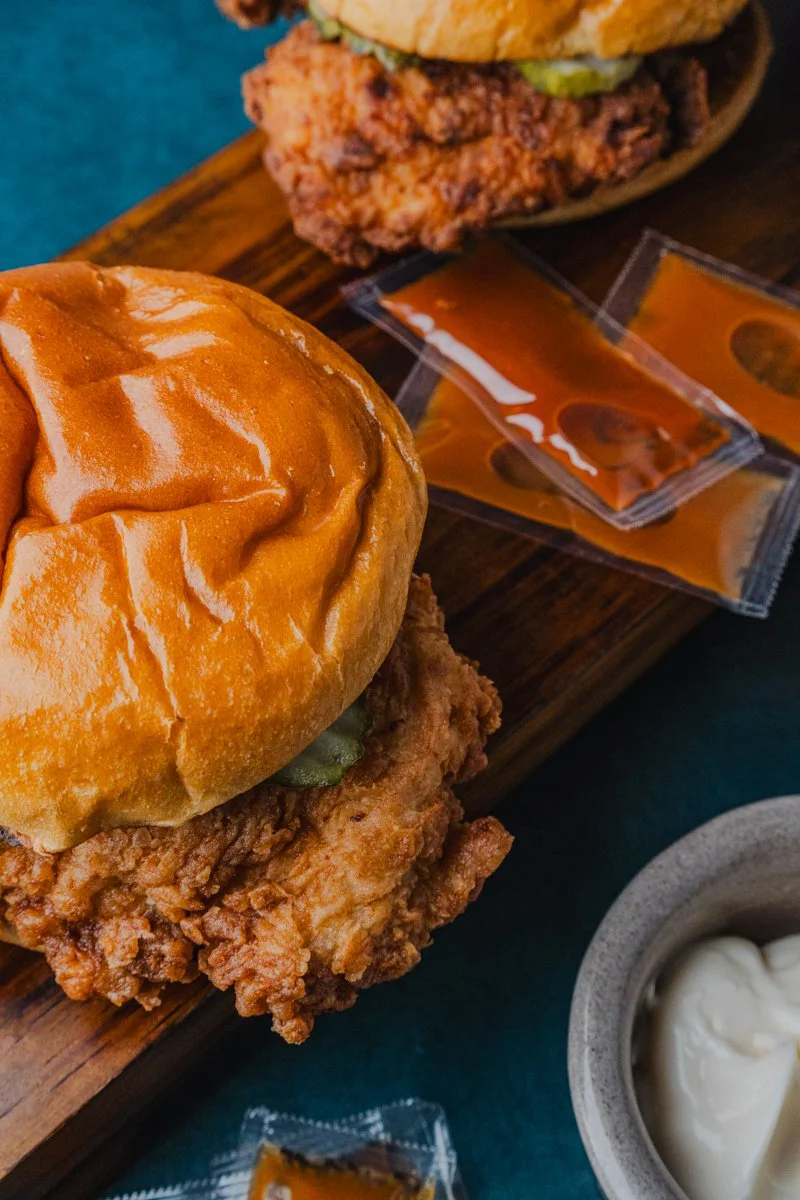
The concept was simple: a Chick-fil-A–inspired chicken sandwich, built from scratch.
But simplicity is deceptive. The fewer elements you have, the less room there is to hide.
Every decision mattered:
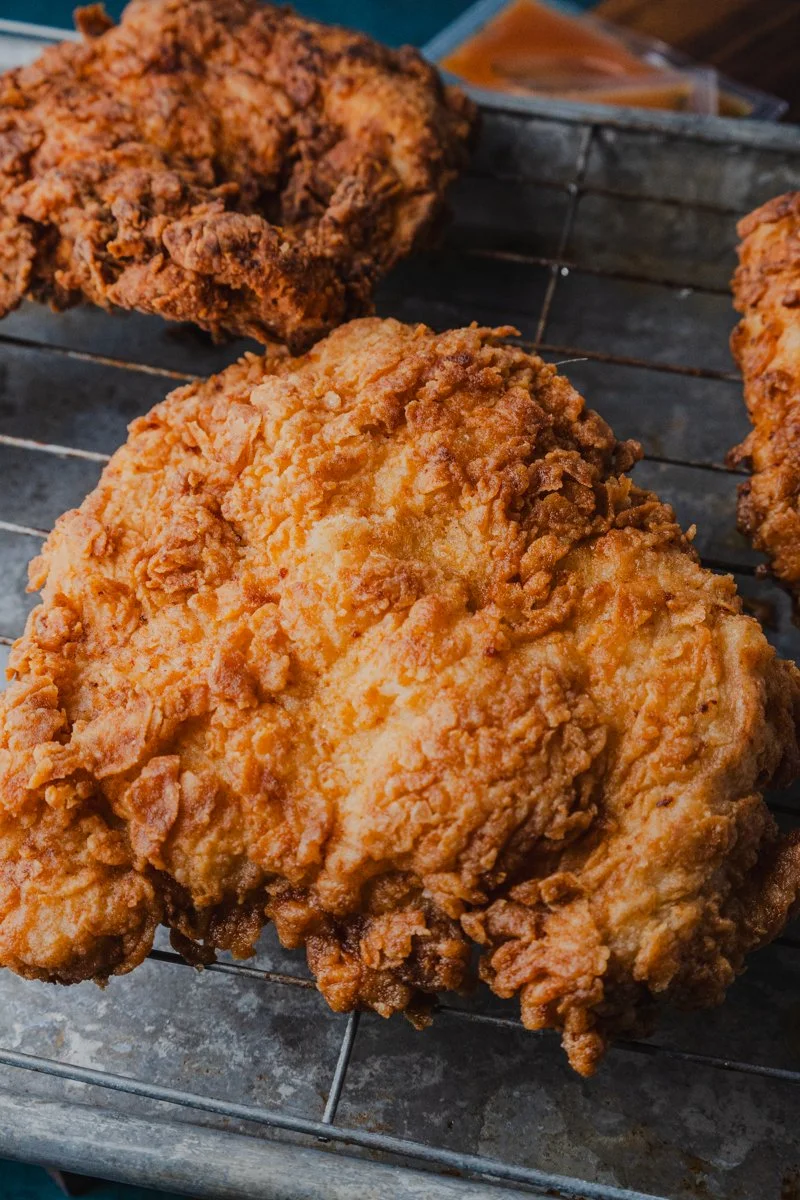
The thickness and texture of the fried chicken
The balance of sweetness and acidity in the pickles
The way steam escaped the bun
How oil sheen caught the light without becoming greasy
These are the same variables that show up on a paid shoot — only here, there was no clock and no client waiting on a monitor. That freedom is the value.
Personal work lets you slow decisions down until they become instinct.
Why this translates directly to client work
In commercial food photography, clients aren’t paying for novelty.
They’re paying for reliability under constraint.
Menus, packaging, and editorial layouts demand images that read quickly and hold up across formats. Personal projects are where that visual discipline is practiced without compromise.
When I photograph a sandwich like this on my own terms, I’m testing:
How far contrast can be pushed before detail breaks
How minimal a composition can be before it feels empty
How texture reads when viewed small, cropped, or reproduced
Those answers carry forward — quietly — into commissioned work.
Presence over production
There’s also something harder to quantify but just as important: presence.
Without a production schedule, the focus shifts from output to attention. You notice things you’d otherwise rush past. You allow the food to tell you when it’s ready instead of forcing it into a pre-planned frame.
That mindset doesn’t disappear on paid assignments. It carries over as calm, decisiveness, and trust in the process — qualities clients feel even if they can’t name them.
Personal work isn’t separate — it’s upstream
This sandwich never needed to exist. But the act of making and photographing it strengthened the same muscles I rely on when the stakes are higher.
That’s the misunderstanding around personal work: it’s often treated as indulgent or separate from “real” commercial output. In practice, it’s upstream of everything that matters.
The work you do when no one is watching determines how you perform when everyone is.
Related Services
I work with restaurants, publishers, and independent brands who need commercial food photography that holds up across menus, packaging, print, paid ads, and editorial use.