
Dawn of the Dead (1978) | 50 Days of Horror, Day 26
Day 26 of 50 Days of Horror: George A. Romero's original Dawn of the Dead turns a shopping mall into a social x-ray, and three different cuts show how editing changes the whole mood.

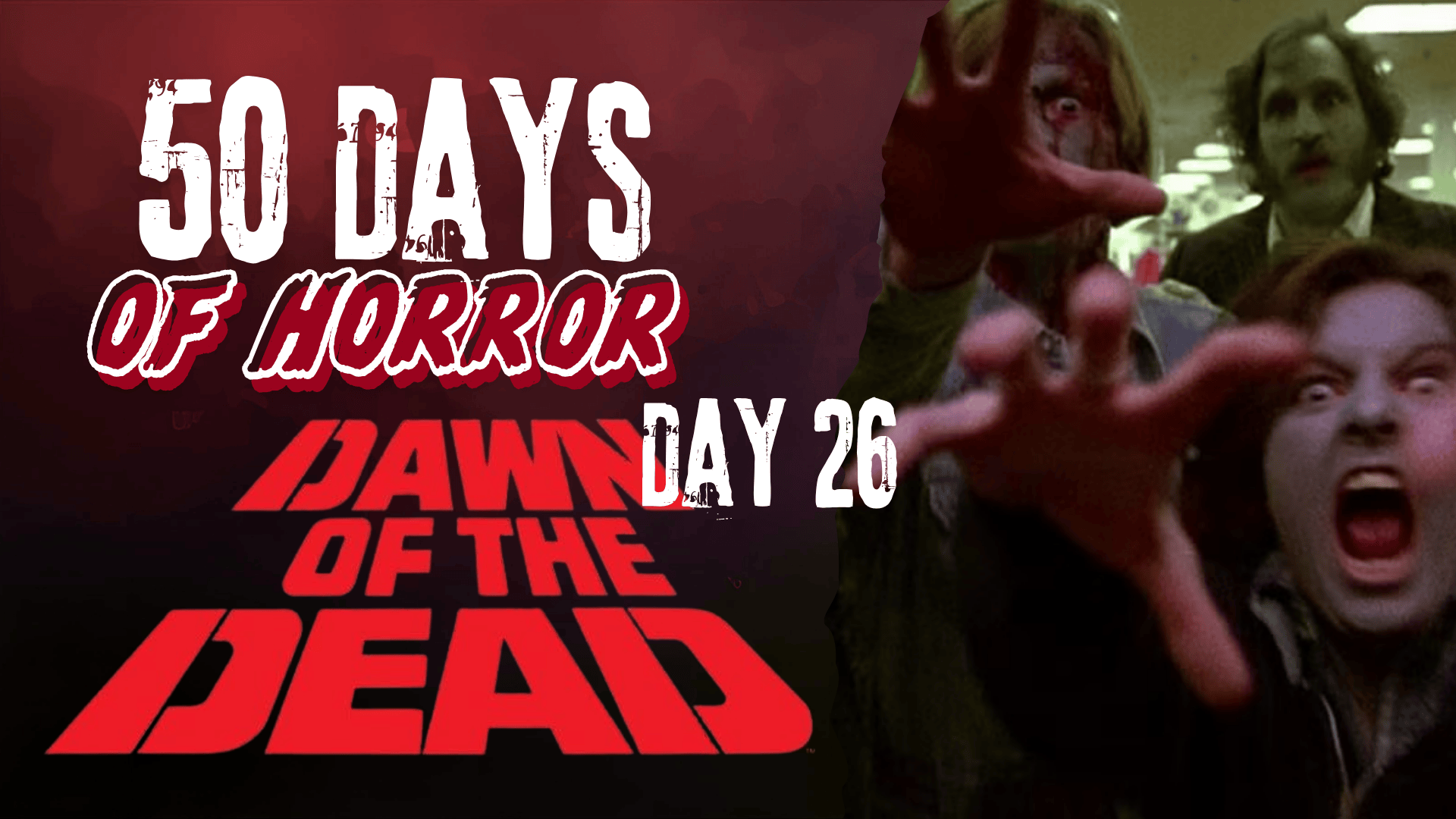
Five days ago this countdown ran through the mall with the 2004 remake. Night twenty-six goes back to the original, the one that made the building itself the argument.
George A. Romero's Dawn of the Dead is a mall siege sure. But it's also strategy, satire, and the slow ache of pretending you're safe when you aren't. The whole movie hangs on a single idea: a handful of survivors building a little kingdom inside a temple of commerce, and for a while it genuinely looks like they've won. Almost. The mall isn't a backdrop here, it's the thesis. Safety through consumption, comfort as distraction, a routine so powerful that people rebuild it even when everything outside the doors is dead.
What sticks is how complete the whole world feels. Blue-tinted zombies drift through escalators and fountains. Needle-drop music lands somewhere between absurd and eerie. Then the film goes quiet, and you can hear the hum of the refrigeration units and the squeak of sneaker soles on tile. Romero is working wide here: bigger scope, bigger questions, and a tone that lets humor and horror share a room while grief sits quietly between the gags. Beneath the blood and banter is a social x-ray of how fast people return to old habits, which might be the most unsettling idea in the film.
You can feel the late seventies in the bones of it. Industrial spaces, cold light, the weight of exhaustion on every face. Tom Savini's practical effects give the violence a handmade punch that still reads as real, and the soundtrack depends on which version you're watching, which is where this one gets fun for collectors.
There are three cuts floating around: the U.S. theatrical release, the longer extended cut, and Dario Argento's international edit with its pounding Goblin score. They're all recognizably the same film, but each one rebalances the rhythm. Some run faster, some more reflective, and all of them carry the same pulse of people clinging to old patterns while everything else collapses. The Ultimate Edition box set is the one worth owning because it puts all three side by side. Watch them back to back sometime and notice how a longer dissolve or a trimmed beat quietly changes what a scene feels like. The restoration keeps that late-seventies texture intact, with natural grain, true blacks, and those blue-gray zombie tones. Skip any over-bright display setting, since it crushes the mezzanine shadows and flattens the mood. It's physical media at its purest, an object that rewards patience.
This is not a jump-scare movie. It's rhythm, routine, collapse, and the quiet realization that no plan survives the end of the world. So here's the question worth arguing about: of the three cuts, which one hits you hardest, and does the answer change depending on whether you came for the satire or the scares?
Part of the 50 Days of Horror series.