
The Blair Witch Project | 50 Days of Horror, Day 17
Day 17 of 50 Days of Horror: The Blair Witch Project builds dread from what you can't verify, and reshaped both horror marketing and the genre itself.

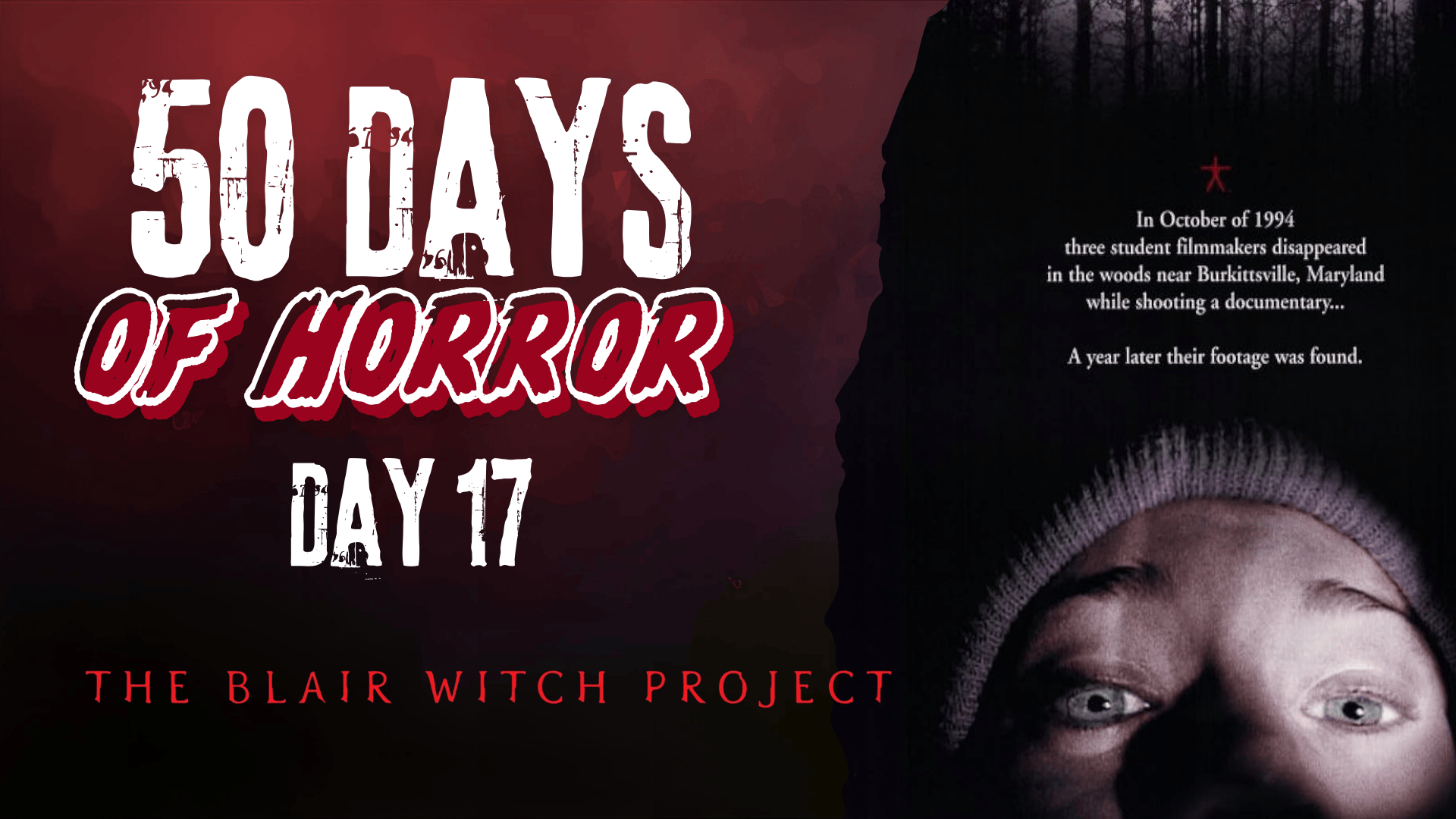
Night seventeen strips horror down to almost nothing and somehow gets more unsettling for it. The Blair Witch Project follows three filmmakers into the woods with a map that stops being useful, and the dread comes almost entirely from what you can't confirm — a stick arrangement that wasn't there before, a voice carrying farther than it should, a final shot your brain keeps trying to make sense of well after the credits roll. Nothing is shown outright. The film hands you fragments and lets your own imagination build the rest, which turns out to be far more effective than anything it could have put on screen directly.
What sells it is how committed the whole thing is to feeling unstaged — overlapping dialogue, exhausted footsteps, a camera that drifts and loses focus exactly the way someone's attention would if they were actually scared. There's a reason this one earns its spot on atmosphere alone: real locations plus a sound mix doing the work of a monster, and a sense that the legend itself feels older than the movie telling it, which gives the whole thing more weight than the budget would suggest it should carry.
There's a personal piece to this one worth mentioning. Going to see this in a theater in 1999 wasn't planned — it happened almost by accident, on a whim, after finding out every showtime nearby had already sold out. The theater ended up so packed that people were sitting on the steps between rows just to get in. And this was still early enough into the internet that nobody in that room was fully sure whether what they were about to watch was real. That uncertainty was the whole experience — a campfire story running at an entirely new scale, right at the moment the internet made that kind of collective not-quite-knowing possible for the first time.
That's also the part of this film's story that's easy to forget once you already know how it ends. It was made for close to nothing and made hundreds of millions, and in doing so it taught an entire industry that dread doesn't require a budget, just intimacy. Found footage exploded in its wake — plenty of forgettable imitators, but also genuine high points that carried the format forward. The DNA of this small, cheap movie is still traceable through the genre today, and what actually lingers from it isn't a single scare, it's the feeling that the woods themselves might be paying attention. A sort of Nightmare Logic.
If you've got the VHS, that's the way to watch this one — otherwise look for a transfer that hasn't been polished up too much; the rough, handheld texture is doing real work here, and dynamic range matters more than usual so the whispers don't get flattened out. Late, quiet, room still, and let the silence do most of the heavy lifting — this is a slow tension bath, not a scare-a-minute watch. Anyone else remember exactly where they were the first time they saw this one?
Part of the 50 Days of Horror series.